You probably remember the spring of 2020. Empty shelves where the toilet paper used to be, a stranger's cart piled with mega-packs, and that quiet little dread when you realized the roll in your bathroom was the last one. Maybe you checked three stores. Maybe you paid more than you wanted to. Maybe you still keep a stash "just in case."
If so, there's nothing silly about that. Running out of toilet paper is stressful because it happens at the worst possible time, and it's a problem with very few good fixes. This post is about a way to take most of that stress out of the bathroom for good.
Why we all started stockpiling
Reporting at the time pointed to a mix of panic buying and a sudden shift in where people used toilet paper, as offices and schools closed and households suddenly used far more at home. The result was empty shelves for weeks in many places, and plenty of us learned to keep a backup supply. Reports of inflated prices were common too.
Some of that habit stuck, and it's understandable. But a stockpile has costs of its own.
The hidden costs of the stockpile
Money sitting in a closet. Buying in bulk ties up cash in paper, and a "sale" on a huge pack only saves money if you were going to use all of it anyway.
Space you can't get back. Bulk packs are bulky. A mega-pack doesn't fit under the sink, so it ends up in a hallway closet, a garage corner or the trunk of the car.
Here's how fast it adds up. Using the same assumptions as our savings calculator, a household of four goes through roughly 564 rolls a year. That's about 23 or 24 packs of 24 rolls, or around two packs every month, that you have to buy, carry home and find room for.
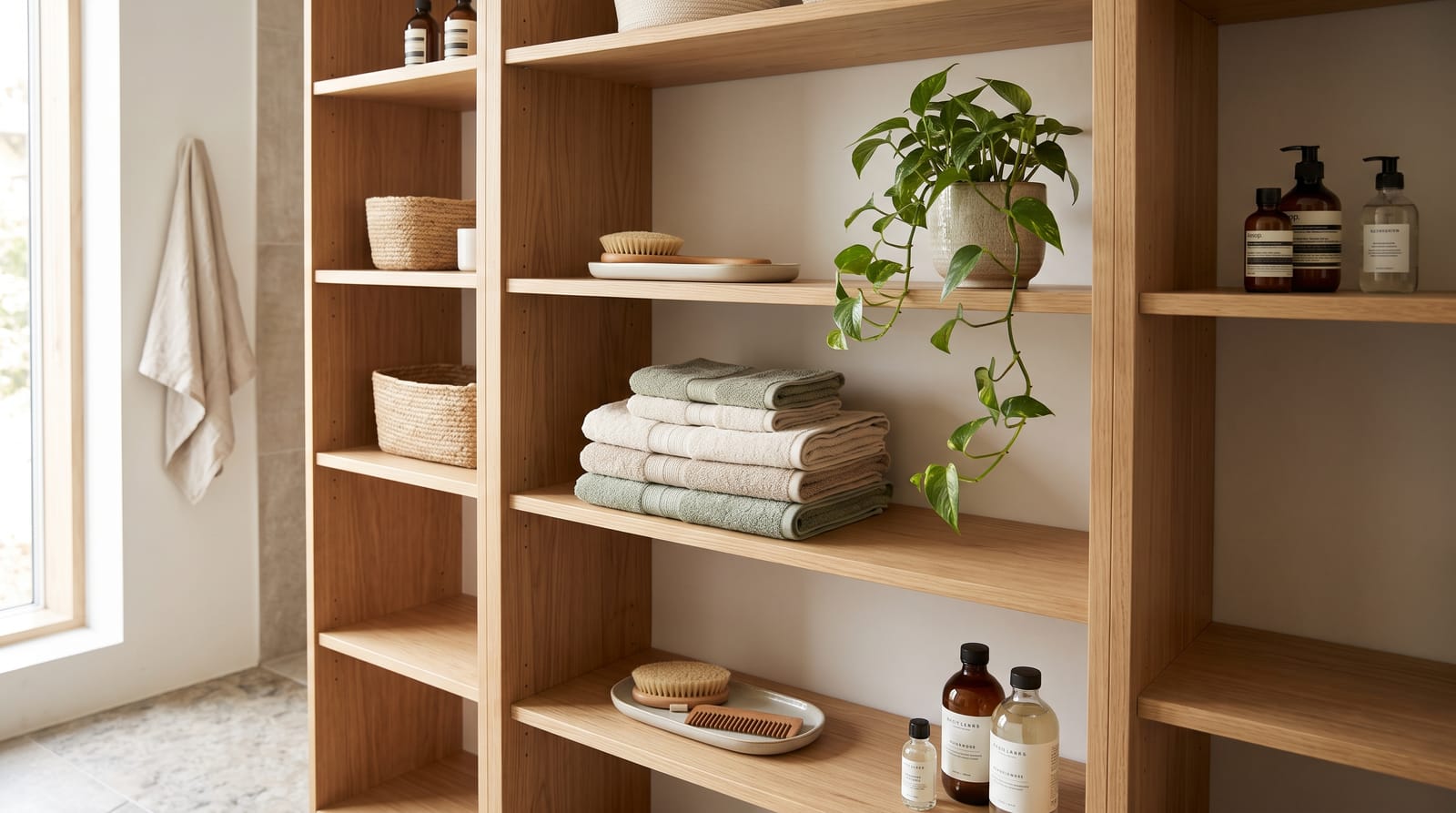
The space you get back
Now picture a bidet household using about 10% as much paper, which is the cautious assumption we use for patting dry. That's around 56 rolls a year, or a couple of packs in total, instead of two a month.
What could go in that space instead?
- A clear shelf under the sink for things you actually use
- A cabinet that closes without a fight
- A trunk free of mega-packs
- The corner of the garage you've been meaning to reclaim
These numbers rest on estimates, so your own household will differ. But the direction is the same for almost everyone: far fewer packs to buy, carry and store.
What it means for the planet
For the eco-warriors in the room, fewer packs also means less plastic wrap and fewer shopping trips for something you'd rather not carry in the first place. And because a bidet replaces most of your toilet paper with a small amount of water, you're flushing less manufactured paper. Published estimates for a typical wash are around an eighth of a gallon, though that depends on your model.
How a bidet changes the equation
A bidet rinses with water instead of relying on paper, so the thing you were stockpiling becomes a small side supply instead of the main event. The next shortage, if there is one, becomes an inconvenience instead of an emergency.
A few honest notes so there are no surprises:
- You may still use a little paper, or a soft cloth, to pat dry. That's why we assume about 10%, not zero.
- A bidet needs running water. It works like the rest of your plumbing, so it won't help during a water outage.
- It's a routine change, and it can feel unfamiliar at first. Start on a low setting and give it a few uses.
The frugal math
If you'd like to see what the switch is worth to your household, run your own numbers in the savings calculator. It takes about a minute and uses your household size and your price per roll.
Time to upgrade the routine
You don't need a bigger closet or another warehouse run. You need a bathroom that doesn't depend on whatever the supermarket has in stock this week. Browse the collection, pick a bidet that fits your toilet, and take the stress out of the last roll.